NEW AUSTRALASIAN MINE DISASTER
DECEMBER 1882
“Not in the history of mining in the colonies has such a catastrophe as that which took place at the New Australasian mine, Creswick, yesterday morning, and when the news was spread in Ballarat, a feeling of consternation prevailed. At the Corner, business was completely paralysed, and when it was announced that twenty-seven men were below, either drowned or imprisoned in the drives, beyond hope of escape with their lives, the earnest enquiries made on all sides showed that many persons had either relatives or friends who were probably amongst those who had met such terrible misfortune. As soon as possible, our Creswick correspondent wired in the names of the men below at the time of the accident, when it was found that the majority were residents of Creswick. At the latter town therefore, there was great excitement, but it was not until 9 o’clock the news of the fearful accident reached there, every man on the claim having been kept to assist in pumping and otherwise helping to get the water down….” Was the quote from a Reporter starting his report at Creswick following the disaster enfolding at the mine.
THE DISASTER
The accident he refers had taken place on the day before Tuesday, December 12th 1882, 5.30am in the morning at Creswick. His choice of the word “excitement” when reporting the event is not the word we would choose today. The tragedy enfolding at the mine would eventually cost the lives of 22 men but the repercussion would linger for many decades later. Many aspects can be compared with events of today: - the focus of the Nation on the progress of the rescue of the trapped miners at the Beaconsfield Gold Mine Disaster and the funds collected for Black Saturday Bushfire Disaster. Reporting for the night shift of Monday, December 11th 1882 41 men clocked on and descended the No.2 New Australasian Gold Mine at North Creswick. Mining has always been a dangerous occupation and the New Australasian No. 2 proved no exception. 22 miners were to lose their lives over the next couple of days until the final rescue Thursday morning of only 5 men alive of the 27 who had been unable to escape. The first Australasian Mine floated in 1866 was owned by speculators including Peter Lalor (of Eureka Fame)and over the ten years of working the clain had experienced problems with water flooding and went into receivership. It was reported on the 6th October, 1876 that a new syndicate had been formed headed by Edward Morey. The mining manager was George Douglas. It proved to be a profitable venture but they had problems with water flooding the shaft so they decided to sink a new shaft No.2. Unfortunately water problems followed them and on one occasions they lost the horses working underground. Prior to the disaster George Douglas died and was replaced by William Nicholas, as the Manager. It is said he was not as cautious as the previous Manager.
On the night shift the miners had their “crib” at 4am. Their “crib” was carried in their “billy” or pail and then they went back to work. Working on the south west drive were Henry Reeves (the contractor) and William Mason. At 5.30am Tuesday 12th December 1882 the water started to pour into the mine from the old workings of New Australasian No.1 Mine. There had been a miscalculation of where the mine workings were.
THE ESCAPE.
Reeves and Mason made good their escape warning four other people on the way. Michael Carmody knocked on the air pipes to warn the men working further along the drive. He informed the captain of the shift John Hodge. Carmody managed to warn John Manley, Thomas Chegwin, and Jabez Bellingham and they went on to warn others. Of the men working below 14 managed to escaped.
THE ORDEAL.
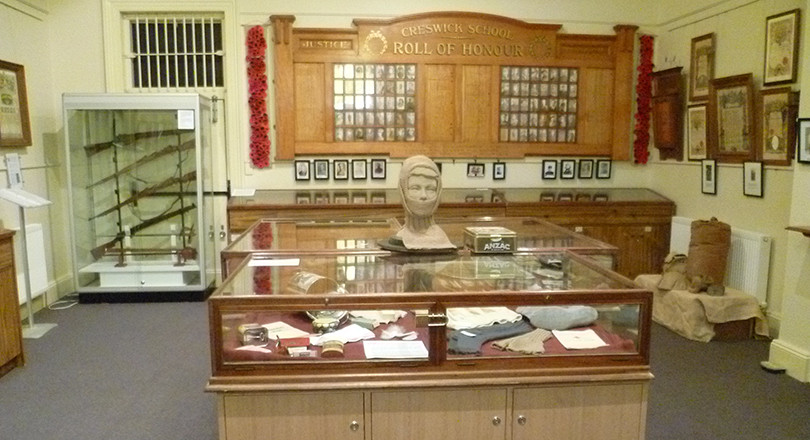
Finding themselves trapped the men sheltered in the No. 11 rise. The area was cramped, dark and there was a bad stench from the putrid water. Air was limited so the men extinguish their candles and hoped for an early rescue. Most were church or chapel members and they sang hymns, prayed and asked ‘God to bless their wife and family.’ Some wrote messages with their knives on their crib pails (“Billy”) and kept their spirits up, hoping for a quick rescue. Rescue was not quick and slowly the men sank into the mud and water. After the rescue three pails came out of the mine inscribed with messages for their family. The one on displayed in the Museum was inscribed “Goodbye dear mother, sisters and brothers; Phillippa my dear girl John Tom Clifton”. The Bellingham brothers wrote on their pail "My dear mother, my dear brother JB., we are all happy-BB." John Manley had scratched with his knife on his: "Goodbye dear wife-J.Manley. Goodbye dear father and mother. The receipt is in the oven fireplace. We went back and told all the men. We are all up No. 11 shoot." After the rescue John Manley's was put on display in the the office of W. Jones costing 1/- to view, the money going to the widow's fund.
ON THE SURFACE.
When the water broke through the loud noise was heard at the surface by James Spargo, the engine-driver, who made frantic effort to increase the power of the pumps. The first person to bring word to the surface was a young trucker named Albert Garton, who climbed the ladder-way and informed James Spargo "The water has broken away underground and all the men will be drowned. James Spargo was quickly joined by James Harris and Thomas Clough and all three kept the engines going and never missed a beat. Offers from drivers at nearby mines were declined as the three felt they knew how to get the best out of the machinery driving the pumps. The community of Creswick was not aware of the disaster until about 9am. as every man working at the mine stayed to help with the rescue. But it was not long before the crowds gathered especially families of the trapped miners. The four doctors in the town Drs. Lyons and Lindsay were in attendance for a majority of the time the men were trapped underground. Dr.Tremearne visited from time to time.
The Post Office & Telegraph Stationon the corner of Albert and Raglan Street was used to send messages to the Mining Dept. Melbourne. In the evening a message was sent from Melbourne that four men with diving equipment was being sent to help with the rescue effort. When they did arrive by train from Cerberus their diving equipment was the wrong size and the hose was not long enough to reach the bottom. When a second train was sent with additional equipment the hose was still not the length required.
THE RESCUE.
As soon as the alarm was given rescue of the miners was started but it was not until Thursday morning that contact was made with the trapped men. Unfortunately the first news brought to the surface was that "We are all right: we are safe". There was much joy and cheering with the news and that they would probably be able to get the men out in a couple of hours. When rescue was near on the Thursday Dr. Lyons went down the mine to help care for the men and was shortly followed by Dr. Lindsay. Dr.Tremearne took care on the surface. Horse and riders made a quick dash to the Telegraph Office in Creswick to get the news to the outside world. Flags were quickly flown from the Town Halls of Creswick and Ballarat. At 8.25am the first man John Manley,was brought to the surface, followed by four survivors. Tom Corbett at 8.55am, Patrick Bowen at 9.00am, Peter Maloney at 9.02am and Cornelius Quirk at 9.15am. All were extremely weak except John Manley. It was John Manley, who when brought to the surface has answered to a query "We counted, and all answered to our names, and we made it either 37 or 27, I can't remember which, but it is one of those numbers." Because 27 was the number of trapped men there was much rejoicing. But it was not to be. Joy soon turn to gloom when the Captain of the Shift. John Hodge, in charge when the water broke, and whose own son, John, was the youngest of the trapped miners, came to the surface. He presented such a picture of grief as the news was broken that the last man alive had been brought to the surface, that as one, a most heart rendering groan broke from the crowd waiting for news. The dead were taken to the changing room to be laid out for the family to file past.
THE FUNERAL.
Twenty-six men were buried the next day at Creswick Cemetery. John Tom Clifton's words were to be proved true their funeral would be the largest that Creswick had seen. Even Sir Alexander Peacock's State funeral would not surpass the number attending. It was estimated that 4,000 attended which included 2,000 members of the Miners' Association. It was estimated that 15,000 people lined the route from the mine to the cemetery. John Gower was buried at Ballarat.
AFTER THE DISASTER.
There was an outpouring of grief and sympathy for those left behind. Over £20,000 was collected for the widows and orphans. Unfortunately all the money did not go to the intended victims. The money was eventually put into a fund in the care of the Lord Mayor of Melbourne. An act of parliament was set up to pay the widows 15/- per week. That payment of 15/- continued until 1934 when the last widow's payment was increased after a petition to Parliament. Money was collected from towns and groups, especially mining towns but funds were received from all over Australia and even donations from overseas. A poem was composed and sold for six pence by William Rankin, President of the Carisbrook and Majorca Branch of the Amalgamated Miners' Association of Victoria. In April 1883 feelings concerning the fund was expressed in the Ballarat Advertiser by those who had contributed to the fund.
"We, the public of Victoria, generously contributed £20,500 for the purpose of assisting the widows and orphans of those unfortunate miners who perished in the late disaster at Creswick. Such sums belong to the said widows and orphans and to no other. The committee has only one duty to perform that is to divide the £20,500 fairly between the sufferers.The subscribers gave the money for one object, viz the relief of the bereaved families. They never contemplated or proposed subscribing to a national fund.If the money now in hand is not devoted to purpose the fund was collected I must say in my humble opinion, the committee will be acting in a very improper manner."
In 1884 the fund became the Mining Relief Act and any injured miner had a call on the fund. The control and disposition of the fund became a matter of controversy as many claimed the money was given for Creswick suffers alone, and should have been disbursed with greater liberality. It was finally wound up in 1950 when £100 was allocated to the surviving orphans and the remainder to the three hospitals Bendigo, Ballarat and the greater portion to Creswick for a new Maternity Ward in remembrance of those who lost their lives The three engine drivers: Spargo Clough and Harris and the pitman Thomas Clarke were presented with illuminated addresses (Spargo and Harris illuminated addresses can be seen in the Museum) from the AMA of Victoria February 1885 for their efforts in the rescue. Twenty nine years after the accident a memorial was erected to the memory of the lost miners in the Creswick Cemetery.
LIST OF THE DEAD.
Christian Frederick Fisher (55) Wittenburg, Germany
James Carmoody (53) County Clare, Ireland
George Baulcomb (52 & 10 months) Maidstone, Kent, England
Nathaniel Trescowthick (45) Cornwall, England
Michael Hayes (45) Ireland
John Gower (44) Lyminge, Kent, England
William Curtis (42) Gwennap, Cornwall, England
James Minahan (38) County Clare, Ireland
William Tregloan (37 & 6 months) Marazion, Cornwall
Edward Campon Dargon (36) Kilkenny, Ireland
Anton Anderson (36) Christianstada, Finland
John Henry Crougey(35) Stithians, Cornwall, England
James Mitchell Temby (35) Redruth, Cornwall, England
James O’Shea also known as James Walsh (34years & 11 months) County Waterford, Ireland
Carl Waldemar Theodor Serrurier (34) Berlin, Prussia
Thomas Penbertha Chegwin (31) Redruth, Cornwall, Ireland
Abraham Wyatt (31) Adelaide, South Australia
Jabez Bellingham (28) Worcestershire England
Benjamin Bowen Bellingham (21) Happy Valley, Victoria.
John Tom Clifton (27) Gainsborough, Lincolnshire, England
Edward Wood (26) Oldham, Lancashire, England
John Thomas Hodge (18) Creswick.
SURVIVORS.
Peter Maloney, John Manley, Tom Corbett, Cornelius Quirk, and Patrick Bowen.
WORKING IN THE MINE AT THE TIME OF THE DISASTER BUT ESCAPED THE FLOODING.
John Hodge, Snr.(Captain of the shift)father of John Hodge, George Fisher(Faceman), Henry Reeves & William Mason(Contractors) Michael Carmody(Platman)son of James Carmody, Charles Menner(Faceman) John Woods, Edmund Woods and Henry Polglase(Truckers),Hugh Crosbie, Alf Trelor, Garton, Taylor & Gunther
ENGINE DRIVERS WORKING THE PUMPS:-
James Spargo (On duty at the time of the accident) James Harris & Thomas Clough
OTHER WORKERS HELPING WITH THE RESCUE:-
Thomas Clarke (Pitman) George Lowe, William Carbis (Shift captain) William Townsend, Robert Egglestone, William Nichols, Jnr (helped in the office)Andrew Robertson (Manager Davies’ Junction Mines)
MEDICAL TEAM:-
Drs. Charles Lindsay, Lyons, John Tremearne & Bell
AMALGAMATED MINERS’ ASSOCIATION
George Williams (President) Ballarat & William Guthrie Spence (Secretary)
VOLUNTEER FIRE BRIGADE:-
Piening(ex Captain),H. Wood,W.Herriot & G. Painter
H.M.S. CERBERUS:-
Divers Trusker & Meyers, Attendant Mexham & Mewes SPIRITUAL COMFORT:-
Rev.Charles Robinson(Presbyterian), Rev.Thomas Williams(Wesleyan), Rev.John Glover(Anglican),F.C. Vian(Primitive Methodist), W. Bettiss(Bible Christian), Fr. O’Brien(Roman Catholic)
INSPECTOR OF MINES:-
Charles Stewart
BENEFACTORS (supplied meals) Mrs. J.T. Jebb and Mrs. W.P. Jones CORONER’S COURT
CORNER - J.C. Thomson, P.M.
JURY - William Bell (foreman),Robert S. Barclay,Thomas F. Kemp, Thomas Belstead, Thomas Phillips, John Donaldson,William Mallan William Solly, George Tait, William Isles, John Bankis, Robert Falla, Richard Rowe, Thomas Morris, A.Ewald.
Information from:- Creswick Museum's archives "Diary of Disaster" L. M. Williams ($5.00 + postage/packaging from Creswick Museum) |